PinpointEyes™ - Transforming Lazy Eye Care Through Technology and Vision Therapy.
PinpointEyes™ provides innovative diagnostic and monitoring solutions that help clinicians and patients measure progress, personalize vision therapy, and improve outcomes for individuals with lazy eye, strabismus, and binocular vision disorders.
Vision Therapy
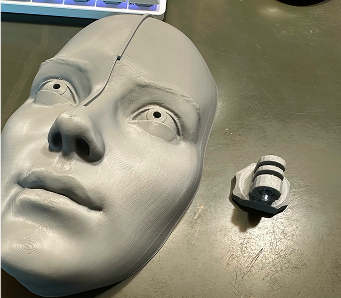
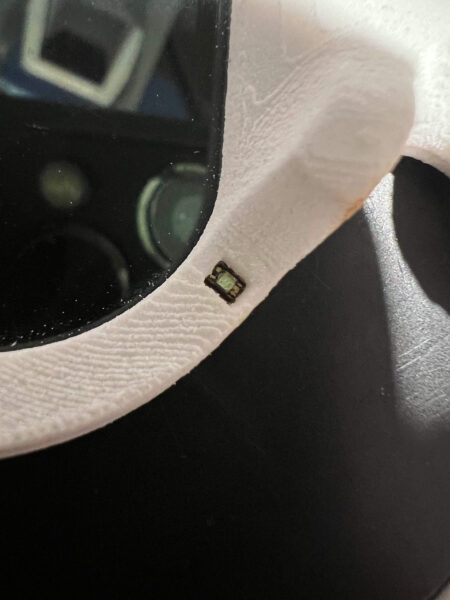
Our patented technology uses smartphone-based imaging and wearable devices
At PinpointEyes™, we believe advanced vision therapy should be accurate, affordable, accessible, and patient-centered.
Our patented technology uses smartphone-based imaging and wearable devices to deliver precise ocular measurements, helping clinicians and families monitor lazy eye and eye misalignment, and providing an in-home vision therapy tool for correcting lazy eye, and providing an in-home vision therapy tool for correcting lazy eye.
Intelligent diagnostic technologies that make the assessment and treatment of lazy eye
By integrating wearable technology, smartphone applications, and advanced image analysis, PinpointEyes™ is creating a new standard for lazy eye detection and monitoring.
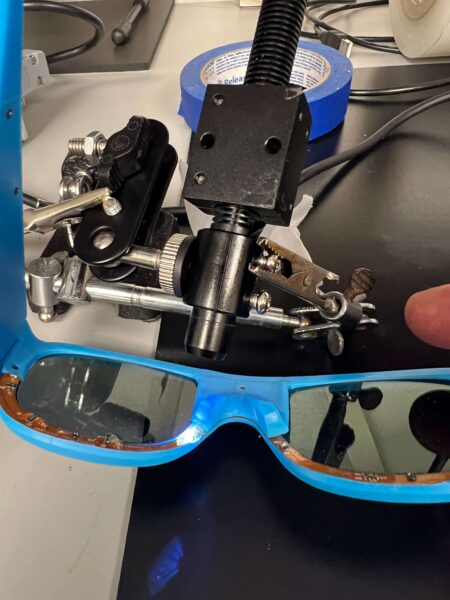
PinpointEyes™ has developed wearable technology used to collect, process, detect, and accurately measure deviations of the eye in a variety of ocular conditions including amblyopia, strabismus, and neuromuscular conditions.
Our patented technology is able to detect minuscule deviations in ocular alignment from a static photograph of the face. Using anatomic structures and our technology deviations are calculated in both millimeters and prism diopters.
PinpointEyes™ App
PinpointEyes™ App is a novel smart phone application
The user friendly interface allows for easy use by physicians, optometrists, and patients alike. By capturing a forward-facing, forward-looking picture of your face, our patented technology is able to recognize and measure variations in your eye’s position, yielding both accurate and reliable analysis .
Or a region of the brain responsible for eye movements
While there is no one specific cause, head injury, cerebral palsy, genetics, and congenital changes, amongst others, have all been reported as potential contributors
Strabismus or what is a “Lazy Eye”?
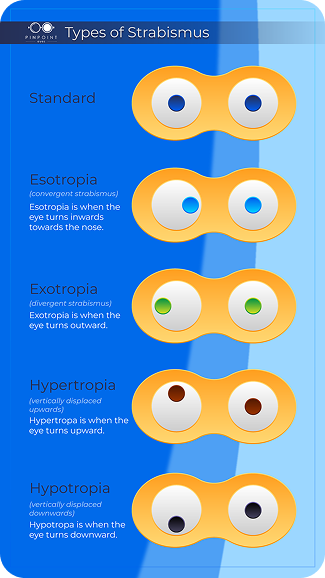
Strabismus, or “lazy eye,” is a condition where one eye looks directly at the object you are viewing, while the other is misaligned.
Some characteristics of strabismus include:
One eye’s inability to attain binocular vision with the other
Issues can be constant or intermittent
Often called a “lazy eye,” “cross-eyed,” or a “squint”
This website uses cookies to enhance your web browsing experience. Click 'Accept' to allow. Cookie settingsACCEPT
Privacy & Cookies Policy
Privacy Overview
This website uses cookies to improve your experience while you navigate through the website. Out of these cookies, the cookies that are categorized as necessary are stored on your browser as they are as essential for the working of basic functionalities of the website. We also use third-party cookies that help us analyze and understand how you use this website. These cookies will be stored in your browser only with your consent. You also have the option to opt-out of these cookies. But opting out of some of these cookies may have an effect on your browsing experience.
Necessary cookies are absolutely essential for the website to function properly. This category only includes cookies that ensures basic functionalities and security features of the website. These cookies do not store any personal information.